Productivity Plan
A responsive desk companion that supports focus through ambient emotional feedback
Abstract
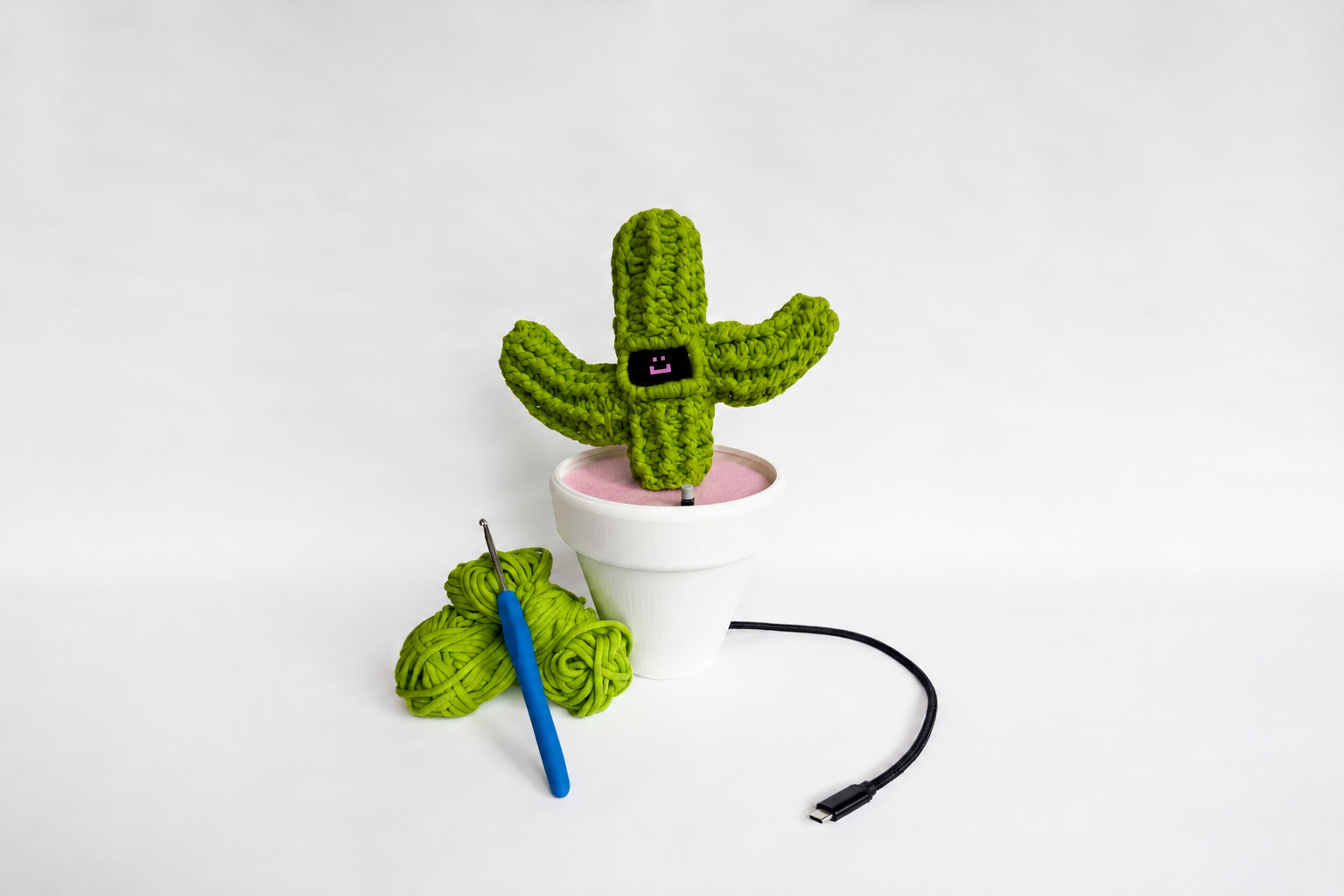
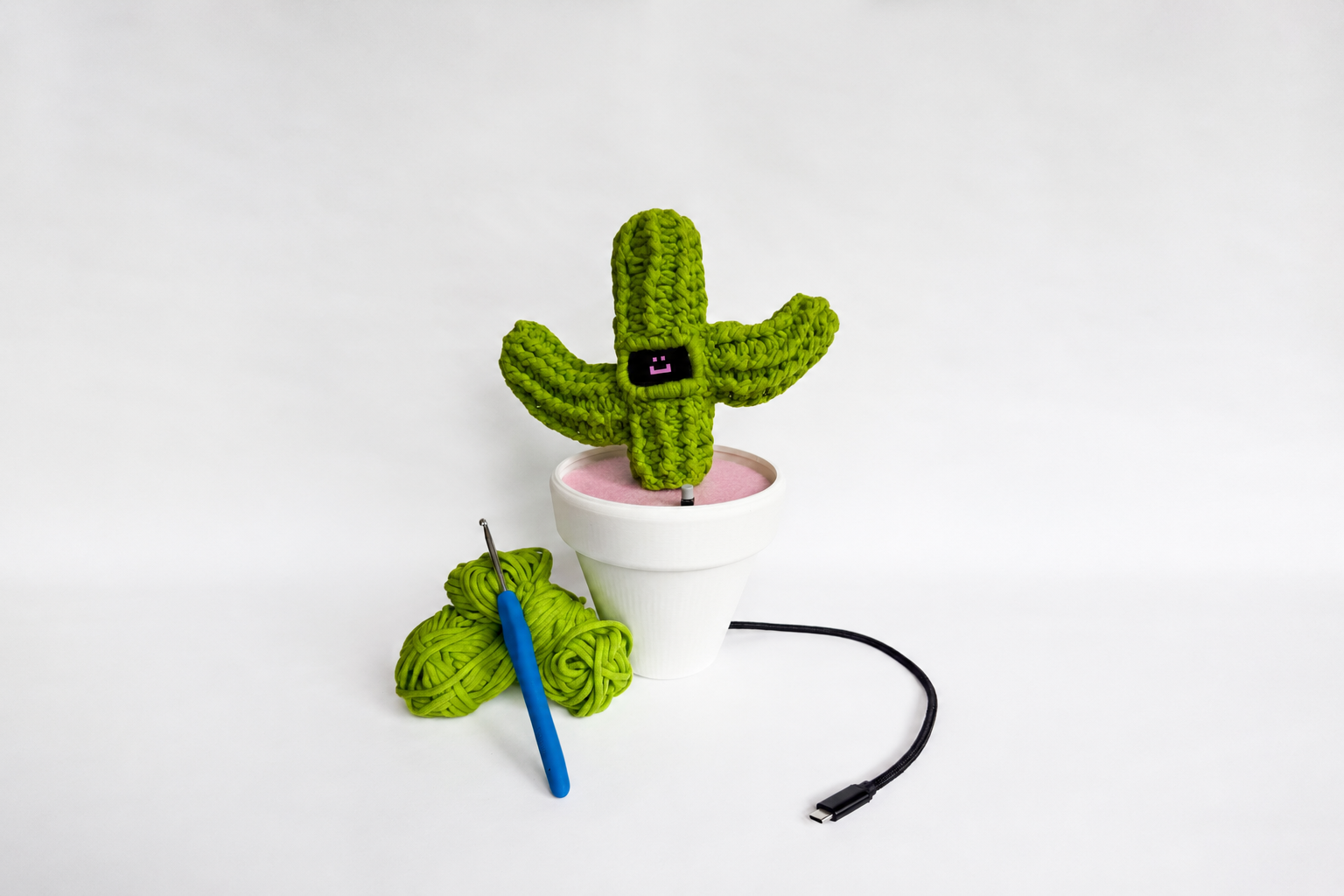
Productivity Plant is an interactive desk companion that gently reflects a user’s focus and emotional state. The system pairs a wearable brooch with a responsive desktop plant, translating motion and sound data into expressive gestures, facial animations, and haptic feedback. Rather than optimizing productivity through pressure, the project explores how technology can support motivation with care, subtlety, and emotional awareness.
Role: Software & Systems Design
Team Size: 3
Duration: 3 weeks
Tools: Particle Photon 2, C++, Servo Motors, Haptic Motors, OLED Screen, Digital Fabrication Tools
Team Size: 3
Duration: 3 weeks
Tools: Particle Photon 2, C++, Servo Motors, Haptic Motors, OLED Screen, Digital Fabrication Tools
Productivity is often treated as something to track, maximize, and control. This project asks what it might look like to support productivity more gently.
Productivity Plant uses embodied interaction to create a tangible mirror for focus and motivation. When the user begins a work session, the plant appears upright and alert. If the wearable detects signs of distraction through movement or environmental noise, the plant gradually wilts or adopts a sleepy expression. After a focused work period, the wearable prompts a break through soft haptic pulses.
The goal was not to fix productivity, but to care for it.
Overview
Many productivity tools reinforce pressure by turning focus into data, streaks, or performance metrics. Our team wanted to create an alternative system that felt less like a tracker and more like a companion.
We asked:
How might an interactive object support focus and emotional awareness without judgment or pressure?
How might an interactive object support focus and emotional awareness without judgment or pressure?
The Challenge
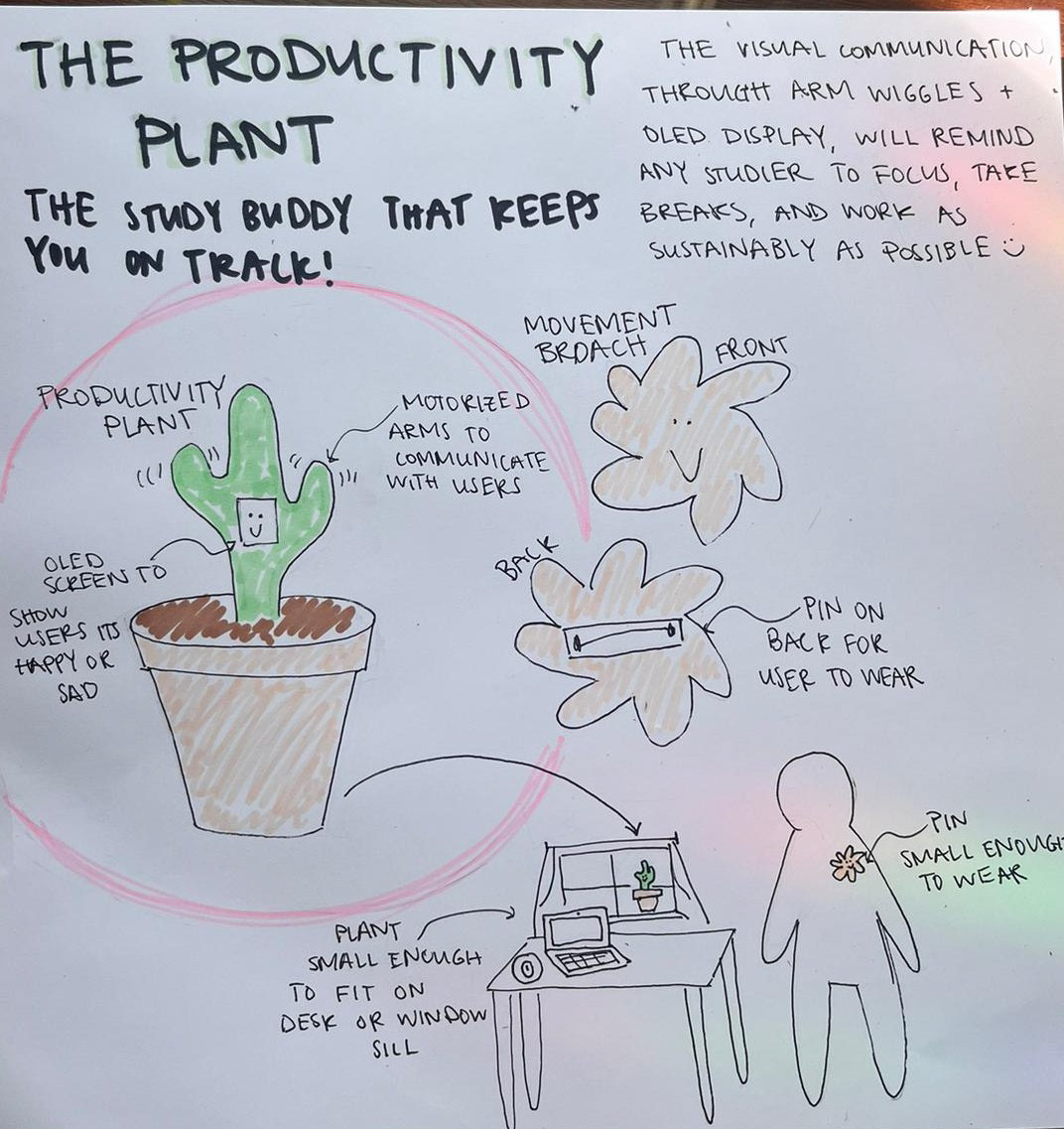
Pitch Sketches
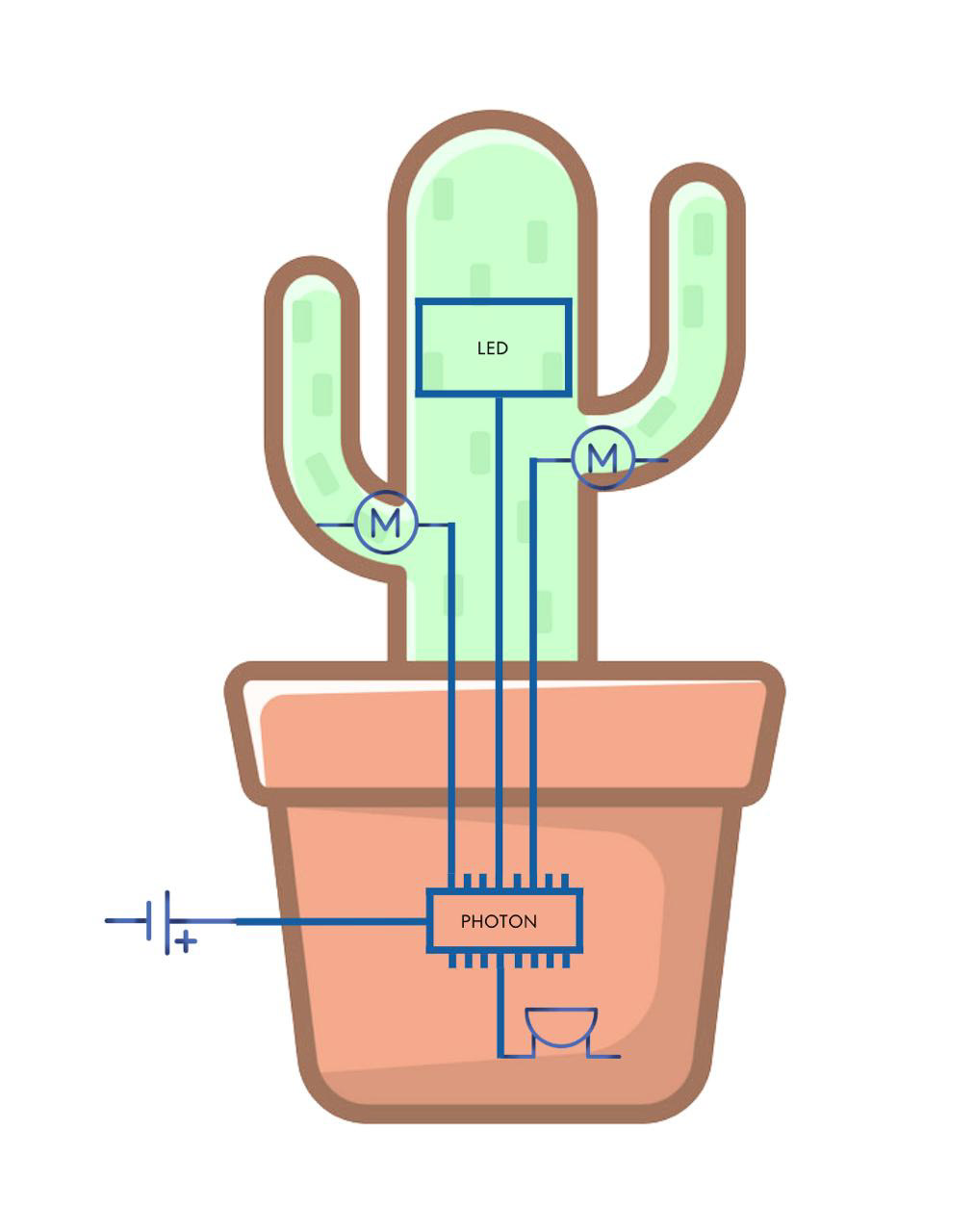
Illustration of where electronics will live
The first prototype was a scaled-down 3D print used for a spatial study. This version allowed me to assess its presence and proportions in context of the spaces I intended it to occupy. From there, I added detailed textures and thinner columns. The second iteration, although visually improved, broke during post-processing due to structural
The system consists of two connected components:
Wearable Brooch
A small wearable device that detects signs of distraction using motion and sound sensors. It also provides haptic feedback when it is time for a break.
A small wearable device that detects signs of distraction using motion and sound sensors. It also provides haptic feedback when it is time for a break.
Desktop Plant
A responsive plant that expresses the user’s productivity state through posture changes and OLED facial animations.
A responsive plant that expresses the user’s productivity state through posture changes and OLED facial animations.
The interaction follows a Pomodoro-inspired rhythm. During work sessions, the plant acts as a quiet companion, subtly reflecting focus, distraction, and rest without interrupting the user’s workflow.
Design Response
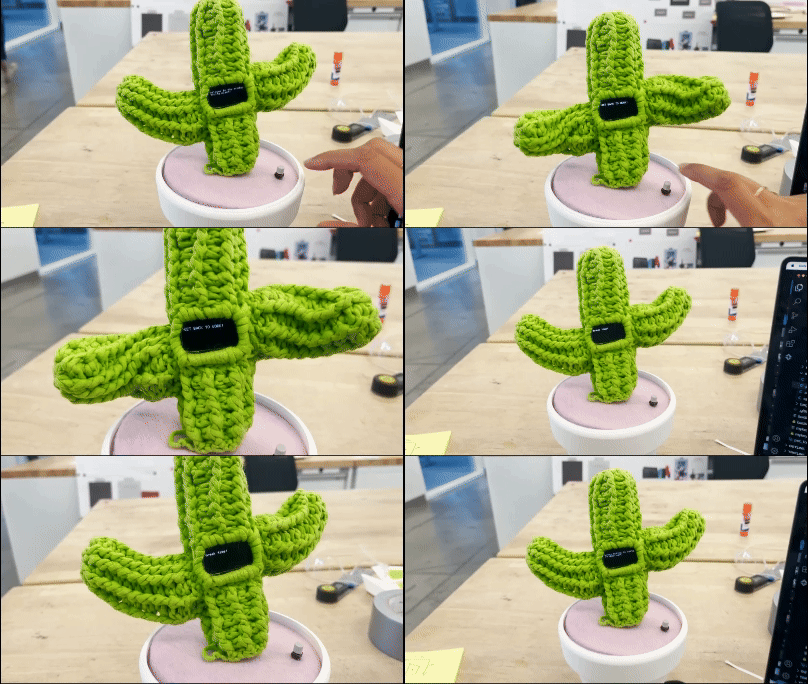
"Go Back to Focus" Animation
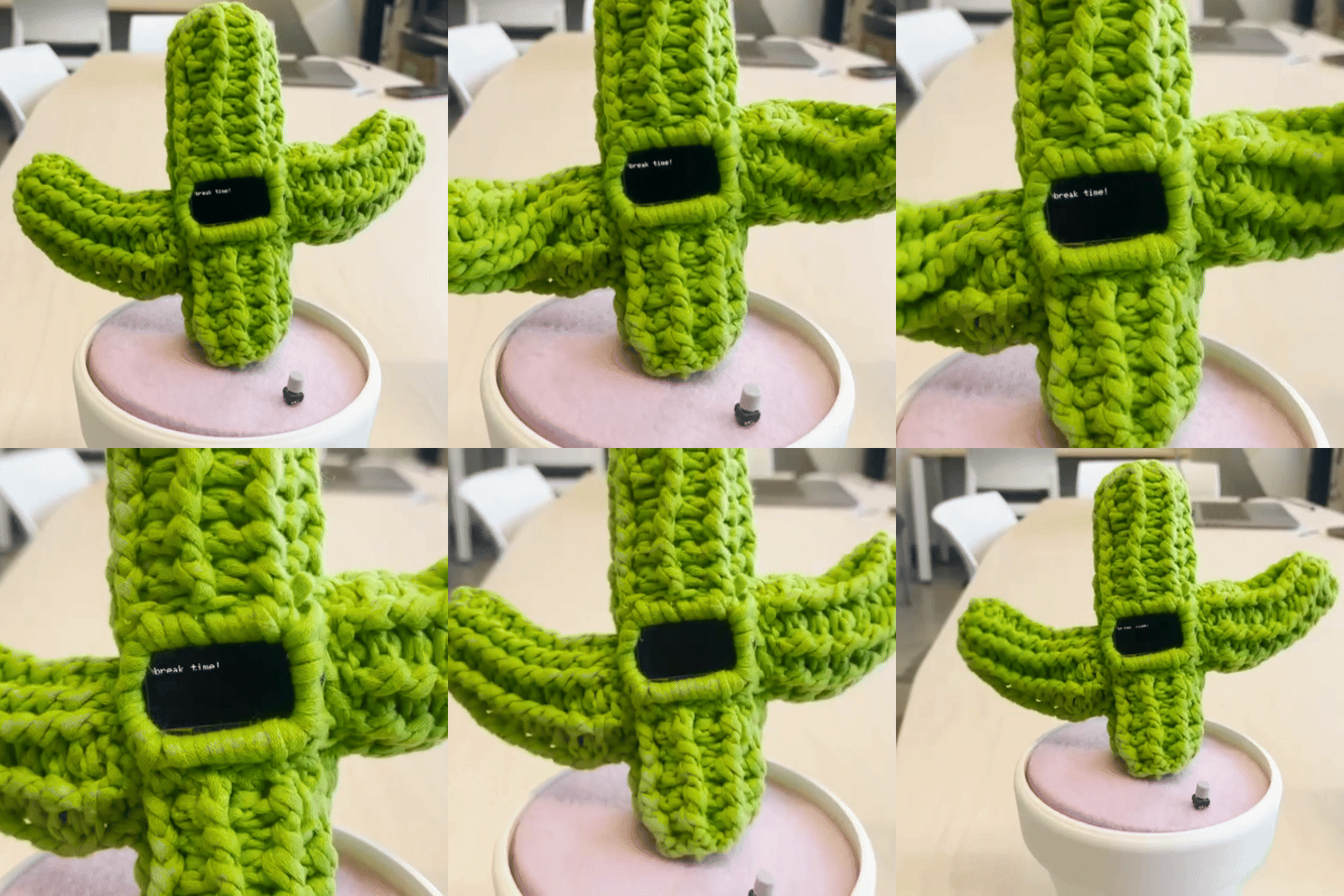
"Break Time" Animation
I designed the system around a simple emotional logic:
• Focused state: plant is upright and alert
• Distracted state: plant droops or appears sleepy
• Break state: wearable triggers gentle haptic pulses
• Celebration state: plant animates after a completed focus session
• Distracted state: plant droops or appears sleepy
• Break state: wearable triggers gentle haptic pulses
• Celebration state: plant animates after a completed focus session
This allowed the system to communicate state changes through expressive physical behavior rather than dashboards or notifications.
System Behaviour
I developed the embedded software for both the wearable and the desktop plant using C++ on the Particle Photon 2.
On the plant side, I implemented state management logic for Pomodoro-style work and break cycles, servo-based posture control, OLED facial animations, button-based interaction, and cloud synchronization with the wearable.
On the wearable side, I wrote the sensor logic for motion and sound input, implemented distraction detection using threshold-based behavior, and triggered haptic feedback and remote plant updates.
I also supported hardware integration, circuitry, and fabrication throughout prototyping and testing. Although I led the software development, the project was highly collaborative. Our team collectively shaped the emotional logic, interaction design, and physical expression of the plant.
My Contribution
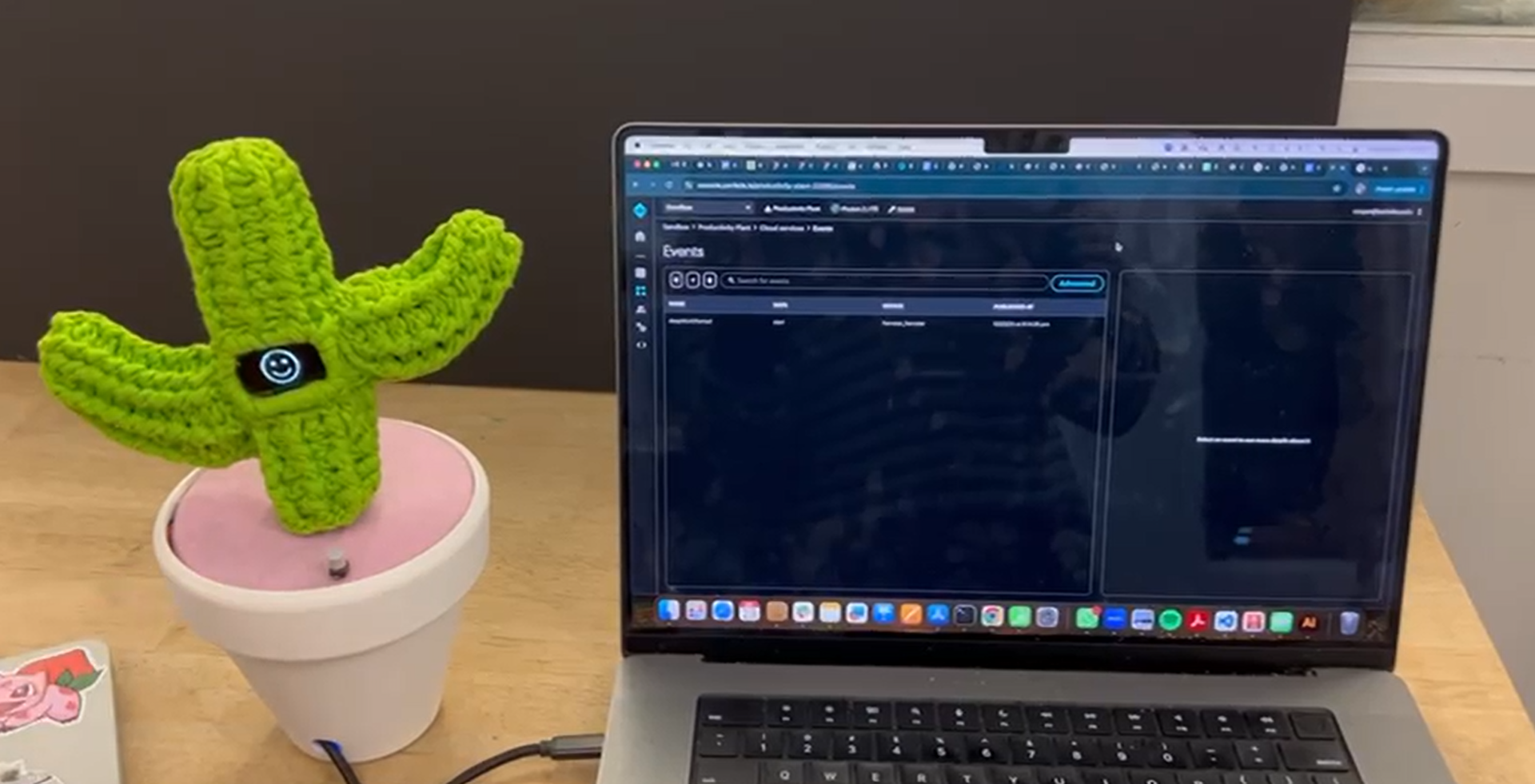
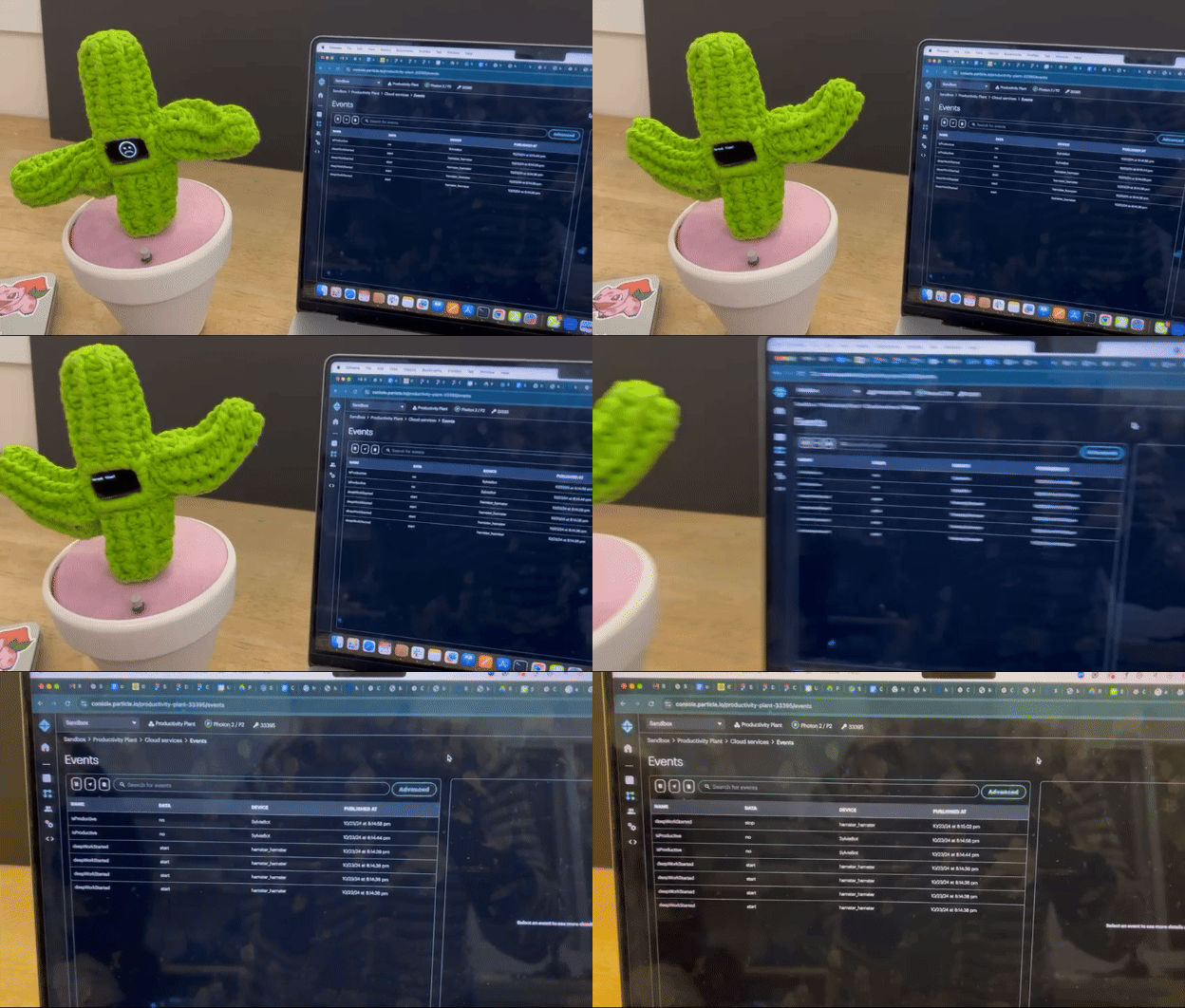
The system architecture was modular and event-driven so that each behavior could be tested, debugged, and adjusted independently.
Key technical components included:
• Particle.publish() and Particle.subscribe() for real-time communication
• Servo control for physical posture changes
• OLED bitmap rendering for emotional expressions
• Sensor thresholding for distraction detection
• Timed state transitions for work and break cycles
• Haptic motor feedback for break reminders
One major challenge was debugging the OLED display, which failed repeatedly during early testing. I resolved this by isolating variables, rebuilding the environment, and restructuring the code into smaller, testable modules.
Technical Development
This project taught me how to develop an embedded system from concept to working prototype. I entered the project with limited experience in microcontrollers and C++, and left with a stronger understanding of real-time systems, sensor-based interaction, and expressive hardware behavior.
More importantly, Productivity Plant reinforced my interest in designing technology that feels supportive rather than extractive. It showed me that interactive systems can be technically functional while still feeling gentle, emotionally resonant, and kind.
Reflection