Conductive Tatreez
Exploring embroidered capacitive touch as an input for interactive wearables
Abstract
Conductive Tatreez is a two-day design sprint exploring whether conductive embroidery could function as a reliable, expressive input for wearable interaction. Inspired by Palestinian tatreez, I embroidered touch-sensitive patterns with conductive thread and connected them to a microcontroller and programmable LEDs. The prototype was intentionally simple: rather than designing a complete wearable experience, I focused on testing the feasibility of embroidery itself as an interface.
Role: Interaction Design, Electronics, Embroidery, Programming
Team Size: Solo Project
Duration: 2-day build sprint
Tools: ESP32-S3, Conductive Thread, Capacitive Touch Sensing, NeoPixel LEDs, Hand Embroidery
Team Size: Solo Project
Duration: 2-day build sprint
Tools: ESP32-S3, Conductive Thread, Capacitive Touch Sensing, NeoPixel LEDs, Hand Embroidery
I approached this project as a quick material and interaction experiment: could decorative embroidery become an electronic interface without adding conventional buttons or sensors?
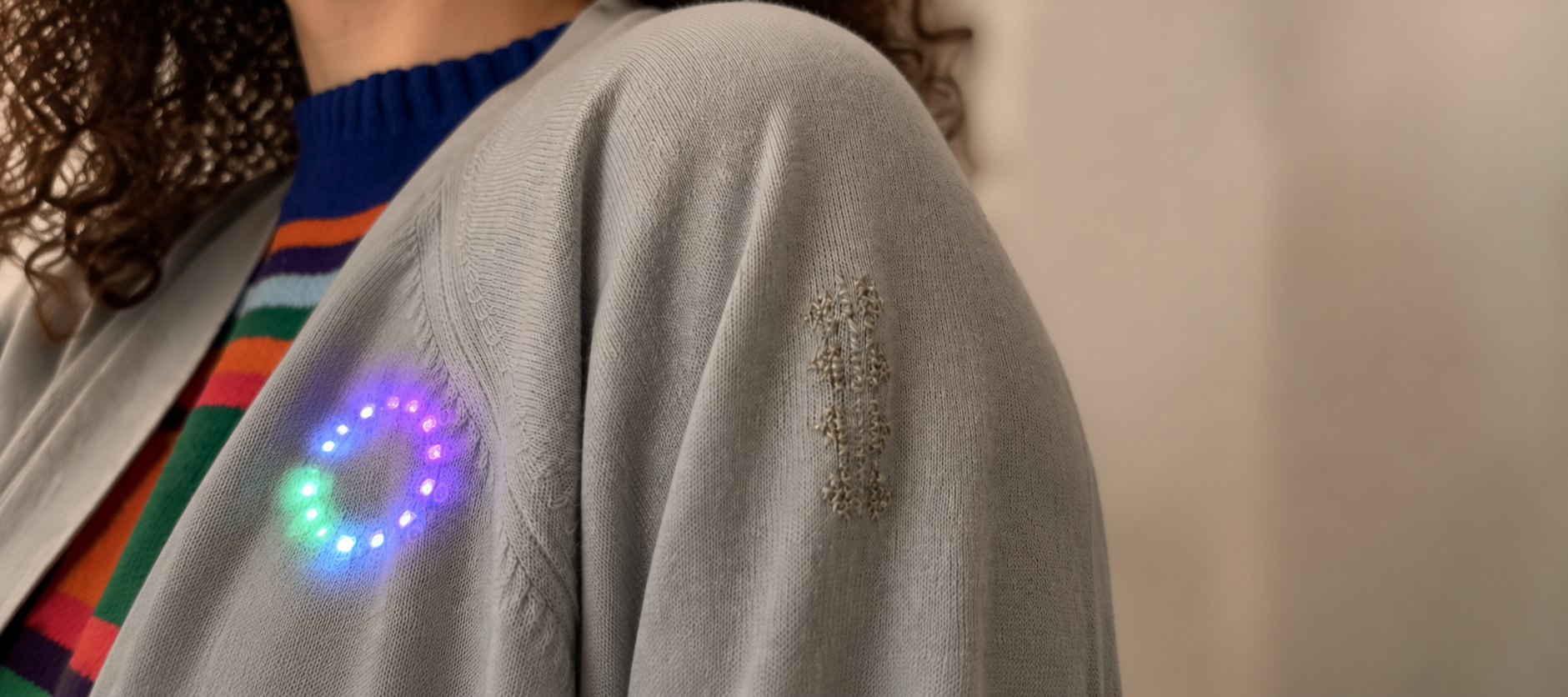
I created three embroidered shoulder patches using conductive thread, with each design divided into four independently touch-sensitive sections. Touching the embroidery triggers corresponding light behavior, creating immediate feedback that the textile is sensing interaction.
Overview
The primary goal was to validate the input, not develop a finished output.
Each embroidered section acts as a capacitive touch sensor connected directly to an ESP32-S3. I programmed four independent touch channels with individual calibration thresholds and hysteresis to reduce flickering and accidental state changes.
A 12-pixel NeoPixel ring provided visual feedback. Each input was assigned a different color (blue, purple, green, or pink) and multiple touches could blend together across the ring. Smooth fades and subtle animations made changes in state easier to perceive.
The LEDs functioned primarily as a debugging and demonstration tool: a simple way to make an otherwise invisible sensing interaction visible.
Feasibility Prototype
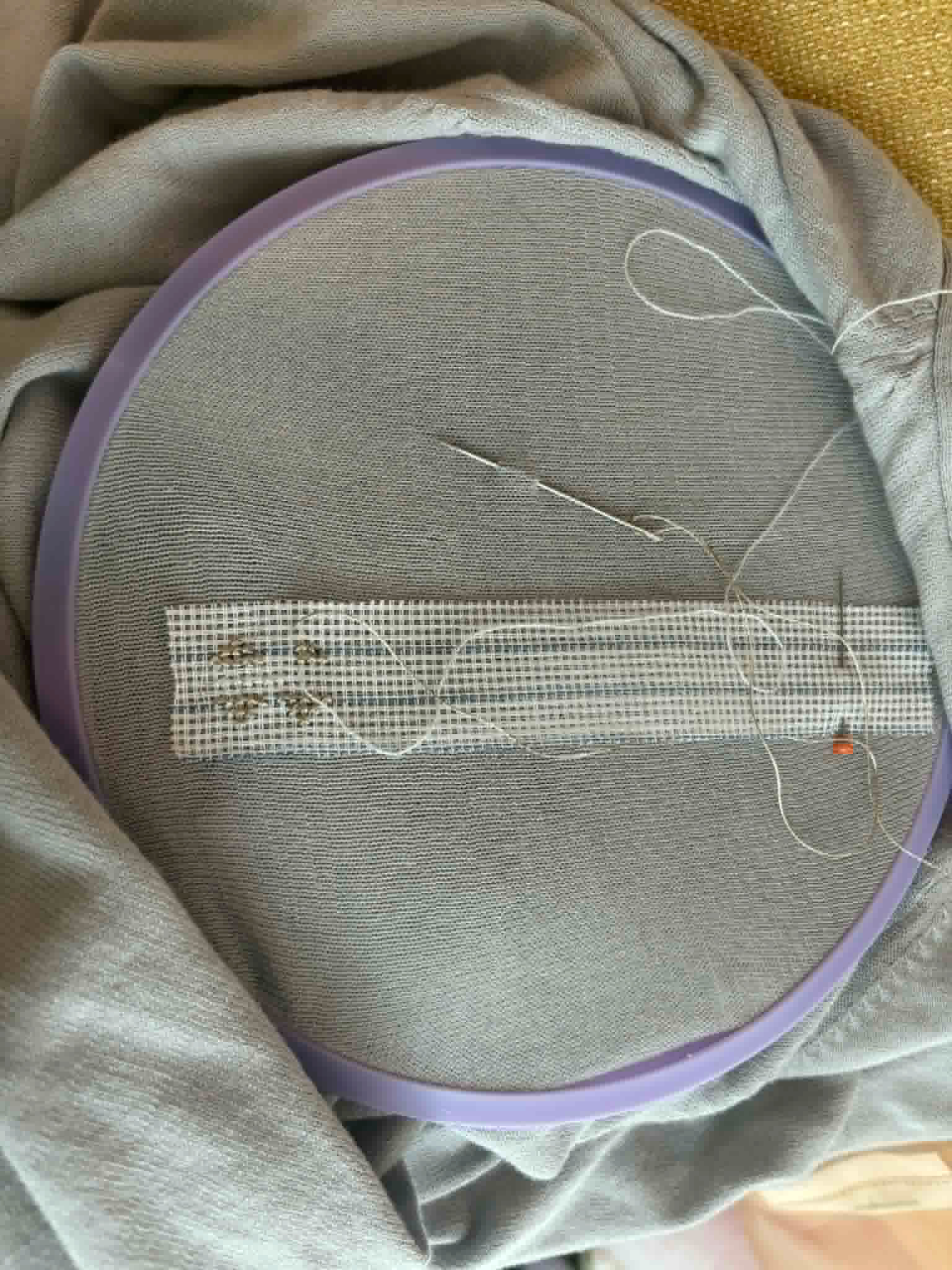
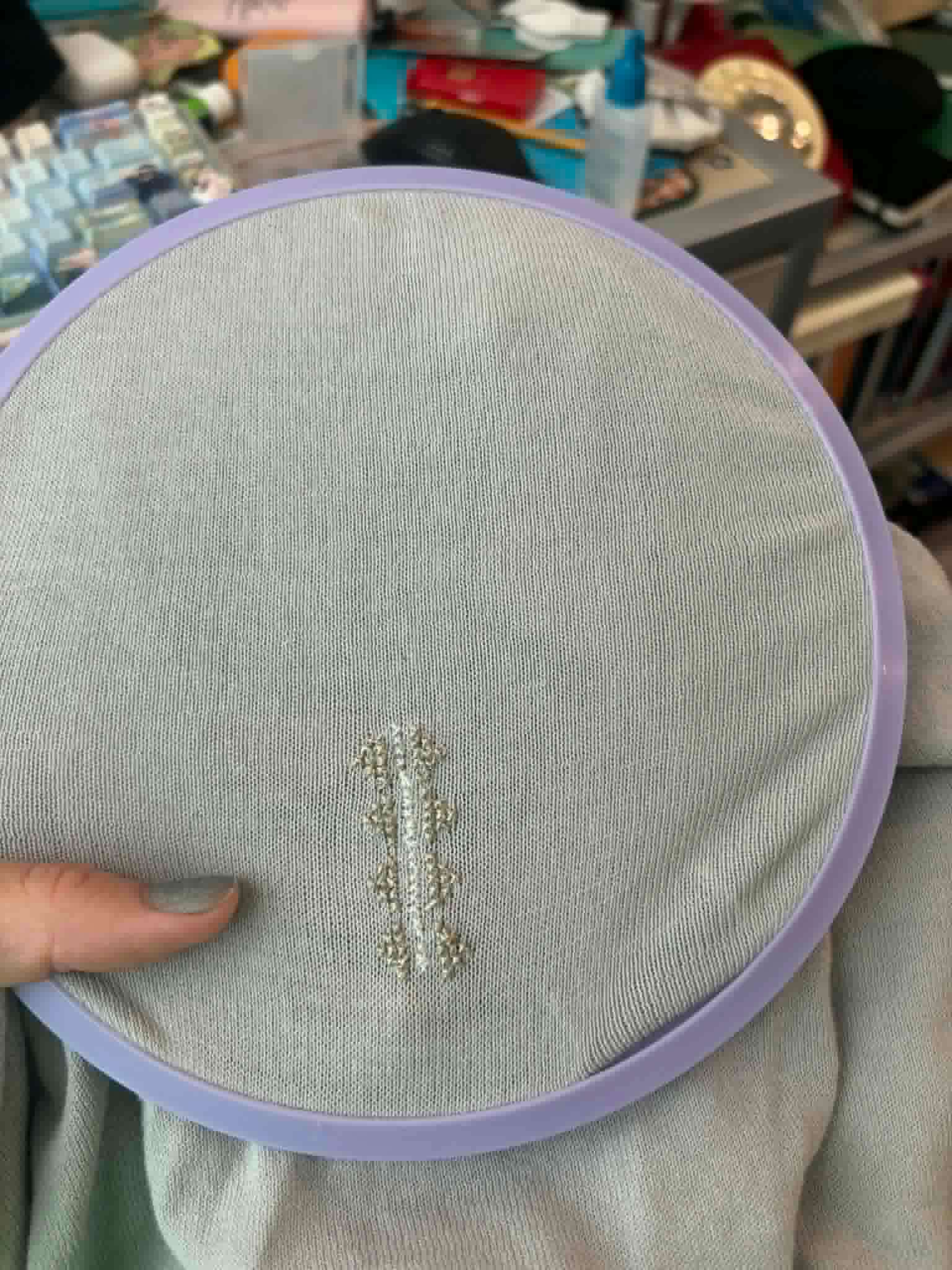
The patches were cross-stitched by hand using conductive thread, allowing the embroidered pattern itself to carry both decorative and electronic functions.
Working directly with conductive thread introduced practical challenges around sensitivity, electrical isolation, and maintaining reliable connections within a soft material. Rapidly fabricating and testing the patches helped me understand where textile construction begins to influence electronic performance.
Fabrication
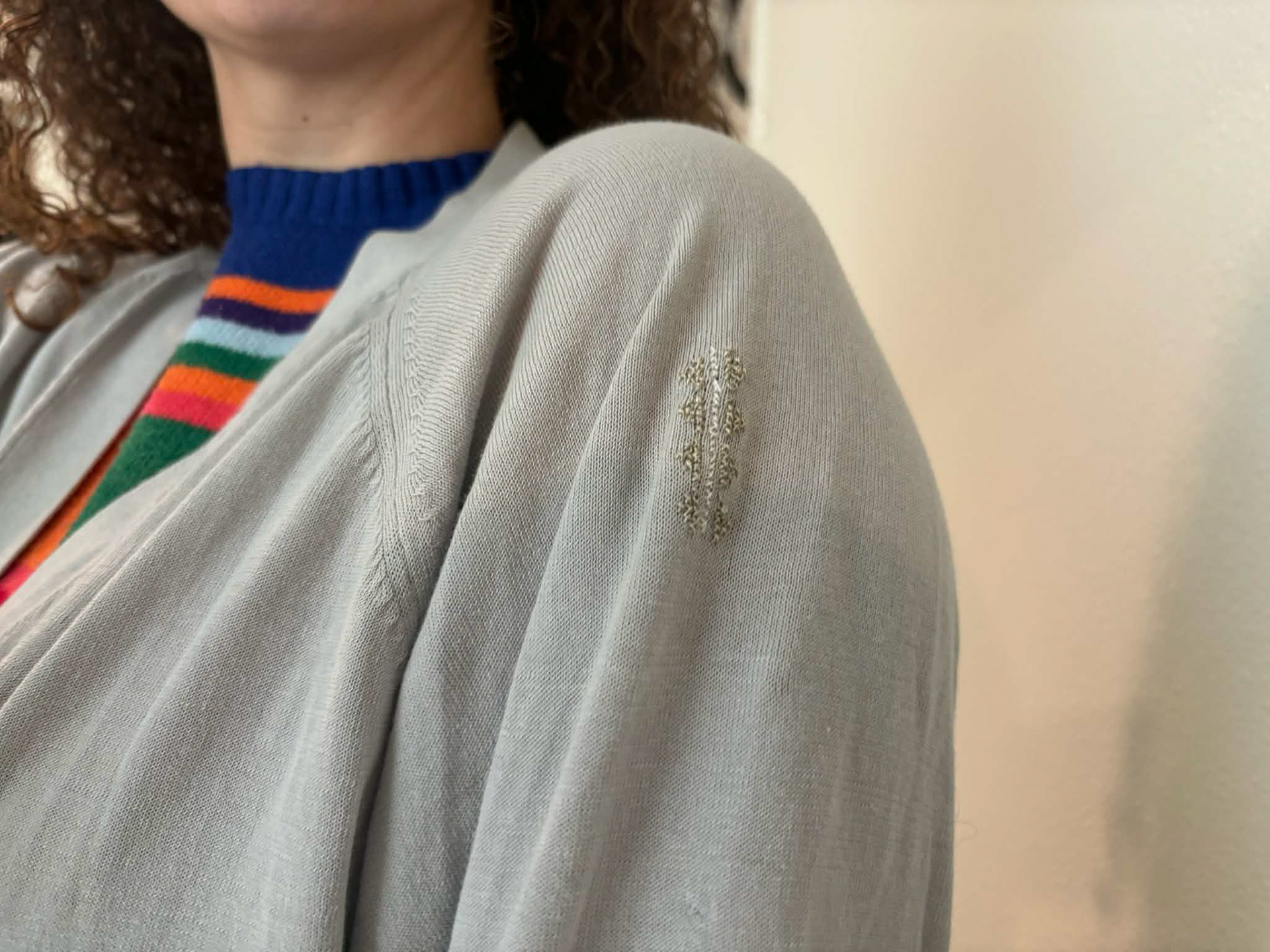
This sprint demonstrated that conductive embroidery can function as a viable capacitive input while remaining integrated into the visual language of a textile.
More importantly, it opened up a larger direction I want to continue exploring: how might culturally meaningful textile practices become interfaces for interactive wearables?
The next iteration would move beyond LEDs as simple feedback and explore how embroidered gestures could control richer interactions through light, sound, movement, or communication between garments.
Reflection